

Klinefelter syndrome accounts for about 3% of male infertility cases. It is characterized by low testosterone and azoospermia in semen, affecting a man’s ability to have children. Its symptoms often become apparent after puberty, but it is usually diagnosed due to delayed conception after marriage. So, what causes Klinefelter syndrome? What is the relationship between Klinefelter syndrome and marriage? And where can Klinefelter syndrome be treated in Egypt? Here are the details.
What is Klinefelter Syndrome?
Klinefelter syndrome (Klinefelter’s Syndrome) is a genetic disorder that affects males due to the presence of an extra X chromosome in the body’s cells. This affects normal male physical development as well as hormonal activity. Klinefelter syndrome is considered one of the causes of male infertility and the inability to conceive naturally. Its impact may also extend to a person’s social life and the nature of the relationships they form.
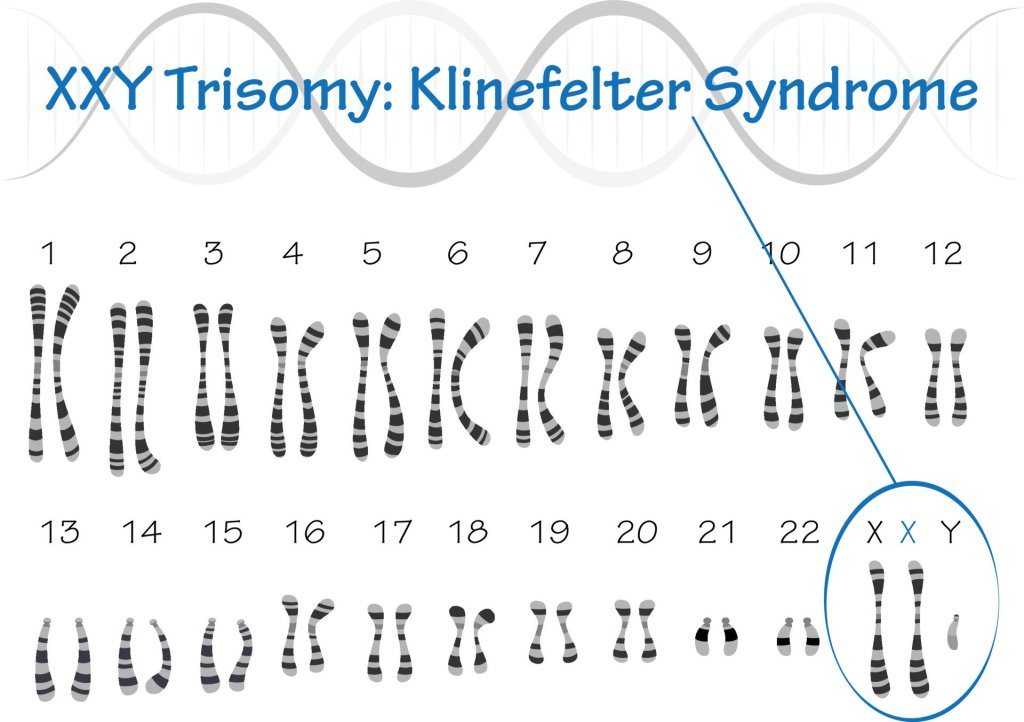
Causes of Klinefelter Syndrome
A man’s cells carry one X chromosome and one Y chromosome, while a woman’s cells carry a pair of X chromosomes. During gamete formation (sperm and eggs), an error in cell division may occur, causing the formation of a sperm or egg with an extra X chromosome.
When that gamete carrying the extra chromosome unites with another normal gamete, the embryo forms with an additional chromosome in its cells, making its chromosomal count 47XXY. This is the common karyotype in Klinefelter syndrome. Other patterns also exist with a higher number of X chromosomes, up to 49XXXXY, in which symptoms are more severe.
The causes of Klinefelter syndrome include the following:
- Fertilization of a normal egg by a sperm carrying an extra X chromosome.
- Fertilization of an egg carrying an extra X chromosome by a normal sperm.
- An error in division of embryonic cells during fetal development, known as mosaic Klinefelter syndrome.
Symptoms of Klinefelter Syndrome
The appearance of symptoms varies from one patient to another. Some patients may not notice any symptoms of Klinefelter syndrome and may appear completely normal, while symptoms are more evident in others. Here are the symptoms of Klinefelter syndrome in detail:
Physical Symptoms of Klinefelter Syndrome
Most physical symptoms of Klinefelter syndrome arise from low testosterone. Symptoms vary depending on the degree of testosterone deficiency and how much the body needs it at different ages.
During a child’s early years, the need for testosterone is low, so the child may appear normal like other children. However, they may have muscle weakness that delays crawling or walking compared to peers, as normal walking may begin after a year and a half from birth.
Suspicion of Klinefelter syndrome often begins during puberty after noticing the following symptoms:
- Infertility.
- Gynecomastia.
- Flat feet.
- Low energy.
- Poor coordination.
- Low libido.
- Weak bones and muscles.
- Small testicles and penis.
- Impaired sperm production.
- Reduced hair growth on the face and the rest of the body.
- Narrower shoulder width with a wider pelvic area.
Behavioral Symptoms of Klinefelter Syndrome
Social and behavioral symptoms of Klinefelter syndrome include difficulty forming social relationships, conflicting thoughts, and weak verbal skills. In addition, a Klinefelter patient is usually:
- Calmer.
- Less confident.
- Anxious.
- Less active.
- Eager to please others.
- More obedient and more willing to follow instructions.
Diagnosis of Klinefelter Syndrome
Klinefelter cases are usually diagnosed after marriage, when the couple complains of delayed conception without a clear reason. With medical examinations and the necessary tests under the supervision of an andrologist, low or absent sperm becomes evident, along with Klinefelter symptoms such as small testicular size and low testosterone levels.
Genetic testing remains the cornerstone of diagnosing Klinefelter syndrome. A skin or blood sample tested in a specialized lab is sufficient to verify the genetic or chromosomal pattern, which reveals the presence of at least one extra X chromosome in a Klinefelter patient.
After diagnosing Klinefelter, the doctor will explain the causes of Klinefelter syndrome and the nature of the relationship between Klinefelter syndrome and marriage that led to delayed conception. Then, the doctor will discuss the available options to improve fertility and reduce the syndrome’s symptoms.
Treatment of Klinefelter Syndrome Symptoms
Treatment of Klinefelter syndrome includes several approaches depending on the symptoms the patient experiences. Most symptoms can be improved with medication, but some behavioral and social issues still require specific therapy. The earlier Klinefelter syndrome is diagnosed, the better the chances of treatment and eliminating chronic symptoms.
Medications for Treating Klinefelter Syndrome
A Klinefelter patient suffers from low testosterone, which is essential in males for completing maturation and stimulating the testicles to produce sperm, thereby enabling fertility. It also affects some important body functions. Drug therapy with specific medications can raise testosterone levels and improve the patient’s health through the following:
- Increasing muscle mass.
- Deepening the voice.
- Increasing sexual desire.
- Improving focus and attention.
- Maturing the reproductive organs.
- Strengthening bones and preventing fractures.
- Promoting facial and body hair growth.
- Enhancing a more masculine appearance, which reduces feelings of anxiety and stress.
It should also be noted that hormone therapy does not increase testicular size and does not treat gynecomastia. It is also not a definitive solution for the infertility experienced by Klinefelter patients; infertility has other treatment options that we will discuss shortly.
Cognitive Behavioral Therapy
A Klinefelter patient may need a consultation with a psychiatrist to help strengthen social relationships and overcome psychological problems they may experience, allowing the patient to live a normal life away from anxiety and low self-confidence. However, not all patients need this type of Klinefelter syndrome treatment.
Klinefelter Syndrome and Marriage
Klinefelter syndrome is not a barrier to marriage, but it does affect a man’s ability to have children. If Klinefelter syndrome is diagnosed before marriage, the couple should be aware of this challenge and work to enhance fertility under the supervision of an andrologist. In most cases, Klinefelter syndrome is diagnosed several months after marriage as a cause of delayed conception.
On the other hand, there is a link between low testosterone in Klinefelter syndrome and marriage, as the resulting effects may include reduced sexual desire and, to a lesser extent, premature ejaculation, which negatively affects marital life.
Does Klinefelter Syndrome Affect Erections?
A Klinefelter patient usually does not lose the ability to have an erection, but it may be affected with severe testosterone deficiency. A 2016 medical study indicated that only 18.9% of Klinefelter patients had erectile dysfunction, most of whom complained of “mild” erectile dysfunction.
Klinefelter Syndrome and Infertility
Ninety-nine percent of Klinefelter syndrome patients suffer from infertility, which is the most prominent feature of the syndrome, due to the testicles’ inability to secrete adequate testosterone and weak sperm production. A 2023 medical study reported that 91% of Klinefelter patients have azoospermia according to semen analysis, which explains delayed conception in Klinefelter patients after marriage.
It is worth noting that infertility in Klinefelter syndrome increases with age due to atrophy of the seminiferous tubules, causing further decline in sperm production. Therefore, modern medical studies indicate the importance of collecting sperm from Klinefelter patients diagnosed in adolescence and freezing it to reduce infertility in Klinefelter cases, as it can later be used in ICSI.
Can Klinefelter Syndrome Produce Sperm?
Some patients may have a very small number of sperm in the semen, which is often insufficient for conception. However, the testicles can be stimulated to enhance sperm production if the doctor deems it possible.
How Can Infertility in Klinefelter Syndrome Be Treated?
With the relationship between Klinefelter syndrome and infertility clarified, the issue in a Klinefelter patient is azoospermia in the semen due to reduced testicular activity. Therefore, infertility treatment in Klinefelter syndrome begins with stimulating the testicles and medically increasing testosterone levels, which stimulates sperm production at a relatively better rate.
At the end of the testicular stimulation phase, microscopic testicular sperm extraction is performed to retrieve sperm in preparation for ICSI. Here are the details:
Testicular Stimulation in Klinefelter Syndrome
Medical or hormonal stimulation of the testicles is the first step an andrologist follows in Klinefelter cases, aiming to increase testosterone secretion and stimulate sperm production. Medications used include:
- Human chorionic gonadotropin (hCG).
- Estrogen receptor modulators, such as tamoxifen.
- Aromatase inhibitors, such as anastrozole.
In addition to antioxidants, which improve the quality of sperm produced inside the testicles, ensuring higher ICSI success rates later. However, dear reader, testicular stimulation should be under the supervision of an andrologist, with adherence to the prescribed doses and the required tests to assess improvement.
It is also recommended that the patient undergo an Anti-Müllerian Hormone (AMH) test, which reveals the activity level of the seminiferous tubules inside the testicles. This is important for determining the success of microscopic testicular exploration and the chances of finding sperm within the testicles.
Read also: Varicocele… Does it really cause infertility?
Microscopic Exploration and Klinefelter Syndrome
Microscopic testicular sperm extraction (Micro-TESE) has emerged as a highly successful technique for retrieving sperm from the testicles, with far fewer complications than other sperm retrieval methods. Microscopic exploration also has the highest success rates. The procedure is performed using a surgical microscope with powerful magnification, with minimal surgical intervention.
Dr. Mohamed Wael Ragab performs microscopic testicular exploration using the German technique, using the German Carl Zeiss microscope, which enables a complete exploration of the testicles unlike the traditional technique. This increases the chances of finding sperm within the testicles and provides greater assurance of Micro-TESE success.
Klinefelter Syndrome and ICSI
After retrieving sperm from the testicles, ICSI is the final step in overcoming Klinefelter-related infertility. The sperm are prepared in the lab and the highest-quality sperm are selected. Then, a sperm is injected into the egg after eggs are retrieved from the wife’s ovary. After the fertilized egg develops to a certain stage, it is transferred into the uterine lining to complete its development into a full embryo.
It is worth noting that the success rate of infertility treatment in Klinefelter patients has gradually increased with advances in medical techniques, reaching about 43% successful pregnancy rates in these cases according to the latest medical studies, provided that the treatment steps—starting with testicular stimulation—are carried out under the supervision of a highly experienced andrologist.
You may also be interested in: Sperm abnormalities… Pregnancy with a 100% abnormality rate
Complications of Klinefelter Syndrome
On the other hand, and aside from the link between Klinefelter syndrome and marriage, if the condition is left untreated under the supervision of a specialist, the patient may be at risk of any of the following Klinefelter syndrome complications:
- Varicose veins in the legs.
- Heart disease.
- Osteoporosis.
- Blood clots.
- Lung diseases.
- Tooth decay.
- Severe depression.
- Seizures.
- Learning difficulties.
- Metabolic syndrome.
- Immune disorders.
- Cancer (breast cancer).
- Type 2 diabetes.
Is Klinefelter Syndrome Dangerous?
In light of the potential complications mentioned above, the severity of Klinefelter syndrome is relative and not the same for all patients. Patients who start Klinefelter syndrome treatment early face lower health risks, while delayed treatment increases the chances of developing certain complications such as diabetes.
Treatment of Klinefelter Syndrome in Egypt
If you are experiencing difficulty conceiving, all you need to do is contact us at Dr. Mohamed Wael Ragab’s clinics to schedule the appointment that suits you for a medical consultation and to diagnose the cause of your delayed conception, whether Klinefelter or otherwise. Then, the appropriate treatment for delayed conception can be determined.
Dr. Mohamed Wael Ragab is considered one of the pioneers in treating Klinefelter syndrome in Egypt, thanks to his expertise in microscopic testicular exploration (Micro-TESE) using the German technique, along with pre-procedure testicular stimulation using the necessary measures to ensure a higher chance of finding high-quality sperm, thereby increasing ICSI success rates.
Frequently Asked Questions About Klinefelter Syndrome
Several questions revolve around Klinefelter and the relationship between Klinefelter syndrome and male infertility. Below are answers to some of these questions:
Why Does Klinefelter Cause Low Testosterone?
Klinefelter syndrome causes underdevelopment of the testicles, which affects testosterone production. Some medical reports have linked Klinefelter syndrome to impaired maturation and function of Leydig cells, which produce testosterone inside the testicles, which is also a possible explanation for low testosterone.
My Husband Has Klinefelter and I Got Pregnant—How Did That Happen?
Medically, this may seem unusual given the high infertility rate among Klinefelter patients. However, the presence of a small number of sperm in the semen provides a very small chance of pregnancy. In addition, a special type of the syndrome called “mosaic Klinefelter syndrome” is characterized by higher chances of natural pregnancy.
What Research Is Being Conducted on Klinefelter Syndrome?
Medical research on Klinefelter syndrome focuses on a deeper understanding of the genetic pattern of the syndrome, exploring better ways to overcome infertility in Klinefelter patients, and early detection of Klinefelter syndrome to preserve fertility in affected adolescents.
Conclusion
- Klinefelter syndrome is the most common genetic abnormality affecting males.
- Symptoms of Klinefelter syndrome begin to appear clearly during puberty and beyond.
- The relationship between Klinefelter syndrome and marriage lies in azoospermia in men.
- Most Klinefelter patients suffer from infertility, and ICSI can be used to overcome it.
- Klinefelter can cause serious health complications if not addressed with appropriate treatment for your condition.
- Contact us now at Dr. Mohamed Wael Ragab’s clinics and get a comprehensive medical consultation to evaluate your health condition.
Sources
- Klinefelter syndrome | Mayo Clinic
- Klinefelter Syndrome (KS) | NICHD
- The Klinefelter Puberty | SpringerLink
- Klinefelter Syndrome | Cleveland Clinic
- Fertility Preservation in KS | SpringerLink
- Fertility in Klinefelter Syndrome | Frontiers
- Fertility Versus Infertility KS | SpringerLink
- Klinefelter syndrome | Medical News Today
- Klinefelter syndrome | MedlinePlus Genetics
- Leydig cell & Klinefelter syndrome | Frontiers
- Klinefelter Syndrome – StatPearls | NCBI Bookshelf
- The Klinefelter Syndrome and Testicular Sperm Retrieval Outcomes | PMC
- Sexual dysfunction in Klinefelter’s syndrome 2017 | Andrologia – Wiley Online Library